How to Build a Career-Ready Portfolio When You Have Little or No Experience in 2026
One of the most frustrating things about starting your career is being told you need experience before you can get experience.
You find a job you're interested in and check the requirements.
"2–3 years of experience." "Previous work experience required." "Portfolio required."
And you start wondering:
How am I supposed to show what I can do when nobody has given me the opportunity to do it yet?
The good news is that you don't always need a long list of previous jobs to build a strong portfolio.
You can start with what you have.
A career-ready portfolio is simply a collection of work that shows what you know, what you can do, and how you approach problems.
And you can start building one before your first full-time job.
What Is a Career Portfolio?
A career portfolio is a collection of projects, work samples, experiences, and achievements that demonstrate your skills.
Think of it as evidence.
Your CV can tell someone: "I can write."
Your portfolio can show them: "Here's something I wrote."
Your CV can say: "I understand data analysis."
Your portfolio can show: "Here's how I analysed this dataset and what I discovered."
That difference matters.
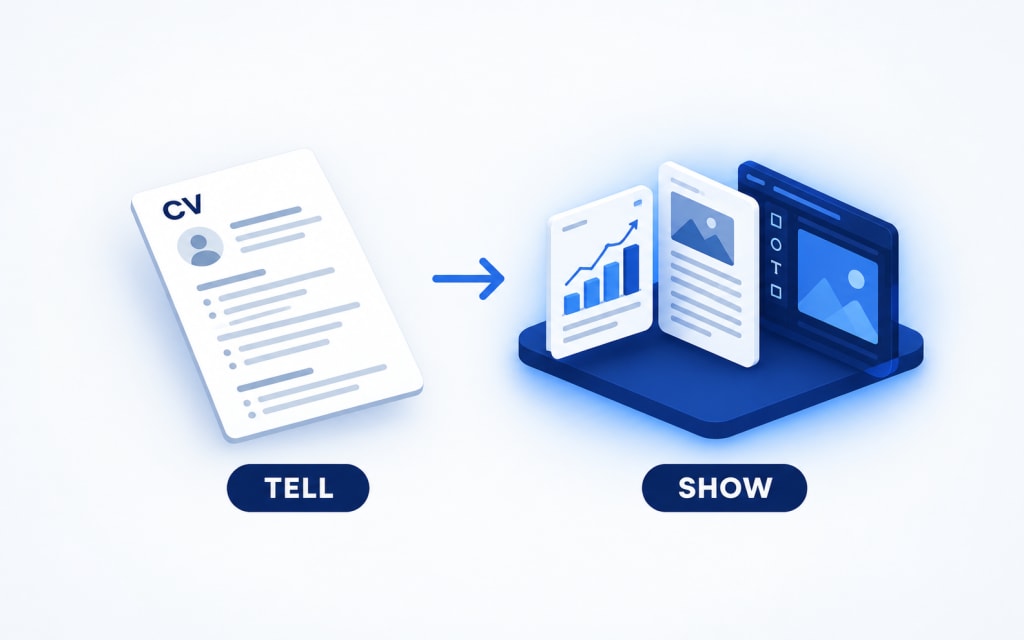
A portfolio gives potential employers, clients, or collaborators something concrete to look at when they're trying to understand what you can actually do.
And it doesn't have to be complicated.
You don't need 20 projects. You need a few good examples that show your ability clearly.
You Don't Need a Job to Start Building Your Portfolio
This is where many beginners get stuck.
They assume that portfolio work has to come from a company, internship, or paying client.
It doesn't.
You can create projects specifically to practise your skills.
If you're learning Content Writing, you could write:
- A blog post
- A product description
- A social media campaign
- An email newsletter
- A sample landing page
If you're learning Data Analysis, you could:
- Analyse a public dataset
- Create an Excel dashboard
- Identify trends in a dataset
- Present your findings in a simple report
- Build a data visualisation
If you're learning Product Management, you could:
- Analyse an existing product
- Create a product improvement proposal
- Develop a product roadmap
- Conduct user research
- Write a product requirements document
If you're learning Product Design, you could redesign an existing experience, create a mobile app concept, or document your design process.
The point is not to pretend that these are professional client projects.
The point is to demonstrate that you can take what you're learning and apply it.
1. Start With the Skill You Want to Be Known For
Before creating your portfolio, decide what you want it to communicate.
You don't need to showcase every skill you have ever touched.
If you're trying to become a content writer, your portfolio should make it easy for someone to see your writing ability.
If you're interested in project management, your portfolio should show how you plan, organise, coordinate, and solve problems.
If you're interested in data analysis, your projects should demonstrate how you work with data and turn information into useful insights.
Start with one skill.
Then ask:
What would I want someone to see if they were considering me for an opportunity in this field?
That question can help you decide what projects to create.
2. Build Projects That Solve Real Problems
A portfolio becomes much stronger when your projects have a purpose.
Instead of creating something just because you need "a project," think about a problem you can solve.
For example:
Content Writing
Instead of simply writing a random article, choose a topic, identify an audience, and create a useful blog post for them.
Social Media Management
Instead of posting random graphics, create a sample social media strategy for a small business. Include your content pillars, posting plan, sample content, and how you would measure performance.
Product Management
Identify a problem users might have with an existing product and create a proposal for how you would improve the experience.
Data Analysis
Find a public dataset, analyse it, identify patterns, and explain what your findings could mean.
You're not just showing that you know the skill.
You're showing that you understand how to use the skill to solve problems.
And that is much more valuable.
3. Use Personal Projects to Show What You Can Do
Personal projects are one of the easiest ways to start building a portfolio when you have no professional experience.
You can create something because you're curious about it, because you want to practise, or because you noticed a problem worth exploring.
For example, you could:
- Create a mock marketing campaign for a brand you like.
- Design an improved version of an app you use regularly.
- Write a series of articles around a topic you care about.
- Analyse publicly available business or industry data.
- Create a project plan for an imaginary event.
- Build a simple website for a fictional business.
- Develop a social media strategy for a small business.
These projects may not have paid you.
They may not have come from an employer.
But they can still demonstrate initiative, creativity, problem-solving, and practical skill.
4. Don't Ignore Volunteer and Community Work
Not every valuable experience comes with a salary.
If you've volunteered for an organisation, worked on a community project, supported an event, helped a small business, or contributed to a group initiative, you may already have portfolio-worthy work.
Maybe you managed social media for a community. Maybe you coordinated volunteers for an event. Maybe you designed graphics. Maybe you wrote communications. Maybe you helped organise a programme. Maybe you analysed information and presented recommendations.
Document it.
Explain what the project was, what your role was, what you did, and what the outcome was.
This is especially useful when you're still building your professional experience because it shows that you have already used your skills in a real setting.
5. Document Your Learning
Your portfolio doesn't have to appear only when you're "finished."
You can also document your learning journey.
Taking a course? Create a project from what you learned.
Learning data analysis? Document an analysis you completed.
Learning content writing? Publish some of your work.
Learning product management? Share a case study or product analysis.
This creates a connection between learning and doing. And that connection is important.
Anyone can say they are learning a skill. A portfolio helps you show what happened when you actually started using it.
6. Tell the Story Behind Each Project
Don't just upload a file and move on. Give people some context.
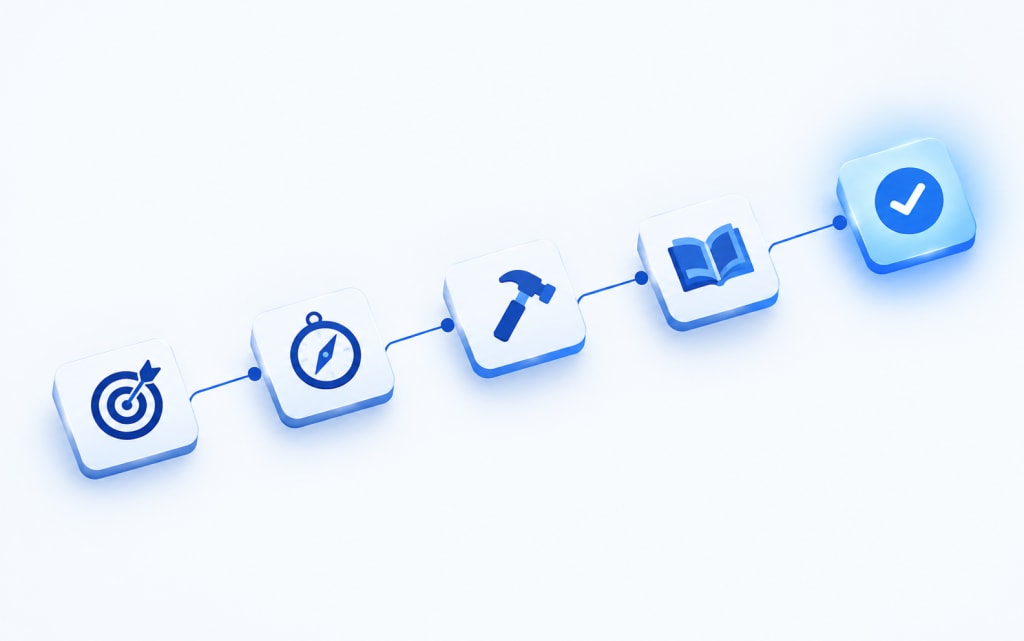
For each portfolio project, consider explaining:
- What was the problem? What were you trying to solve or achieve?
- What was your approach? How did you think through the problem?
- What did you do? What exactly did you contribute or create?
- What did you learn? What did the project teach you?
- What was the outcome? What changed, improved, or resulted from your work?
You don't need to write an entire essay for every project.
A few clear paragraphs can be enough.
The goal is to help someone understand not just what you made, but how you think.
7. Focus on Quality, Not Quantity
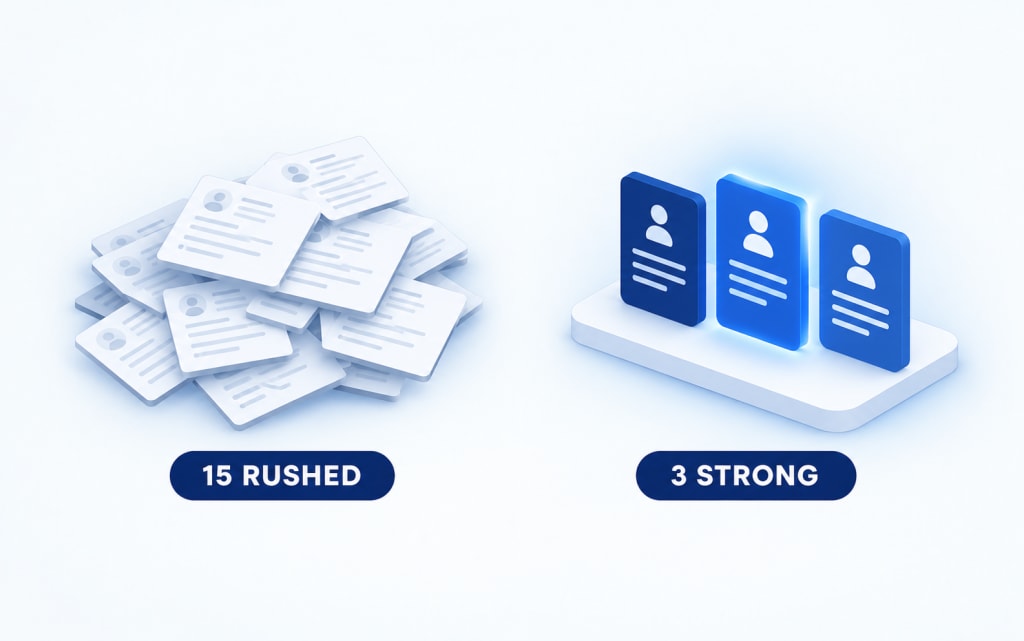
You do not need 30 projects sitting on your portfolio.
In fact, having too many weak or unfinished projects can make it harder for someone to understand what you're good at.
Start with 2–4 strong projects.
Choose projects that show different sides of your ability.
For example, a content writer could have:
- A long-form article
- A social media campaign
- An email marketing sample
- A case study explaining their content strategy
Four useful projects can tell a much stronger story than 15 rushed ones.
As your experience grows, you can replace older projects with stronger work.
Your portfolio should grow with you.
8. Make Your Portfolio Easy to Understand
Your portfolio doesn't need to look like a tech company's website.
It just needs to be clear.
Someone visiting should quickly understand: Who are you? What do you do? What skills do you have? What have you worked on? How can they contact you?
You can build a portfolio using a simple website, Notion, Google Drive, Canva, GitHub, Behance, or another platform that makes sense for your field.
The platform matters less than the quality and clarity of the work.
And remember to keep your links working.
A great portfolio that nobody can access is not helping you much.
9. Keep Updating It as You Grow
Your first portfolio will probably not be your best portfolio.
And that's okay.
As you learn more, complete better projects, work with real clients, volunteer, freelance, or gain professional experience, your portfolio should change too.
Review it regularly. Remove work that no longer represents your ability. Add stronger projects. Update your introduction. Improve how you explain your work.
Your portfolio should reflect where you are going, not only where you started.
You Can Start Before You Feel Ready
You might still be thinking: "But I'm still learning."
That's fine.
You don't have to wait until you know everything before you start creating.
In fact, building projects while you learn can help you understand the skill better.
You learn something. You try it. You make mistakes. You improve. You try again. Eventually, you have something you can show.
That is how a portfolio grows.
Not from waiting for someone to give you your first opportunity, but from creating opportunities to practise, apply, and demonstrate what you're learning.
Your Experience Can Start Here
If you're building your career and you don't have much professional experience yet, don't let that stop you from showing what you can do.
Start small.
Choose one skill. Find a problem. Build something. Document it. Share it. Then do it again.
Your first project may not be perfect.
It doesn't need to be. It just needs to be the beginning.
Because when the opportunity finally comes, you don't want to only say: "I've learned this."
You want to be able to say: "Here's what I can do."
And have something to show for it.
At FUSE Varsity, we believe skills become more valuable when you can put them into practice. Whether you're learning Content Writing, Product Management, Data Analysis, Project Management, or another career skill, the goal is not just to complete a course.
It's to build the confidence and practical ability to use what you've learned.
Ready to start building?
Explore our course catalog and start putting your skills to work.
Learn. Apply. Build. Grow.
About FUSE Varsity
FUSE Varsity is an across-the-board varsity for individuals seeking to equip themselves with the essential skills and knowledge needed to thrive in the ever-evolving landscape of the future of work. Be a FUSE Scholar here.

